
QM Masterclass Blog
Explanations, background, and advice for curious students.
Latest articles

How to prepare for the physics olympiad's quantum questions
The International Physics Olympiad syllabus contains a short list of quantum topics, and the problems set on them reward a handful of formulas and the habit of estimating. Here is the list, the formulas, and where to practise.
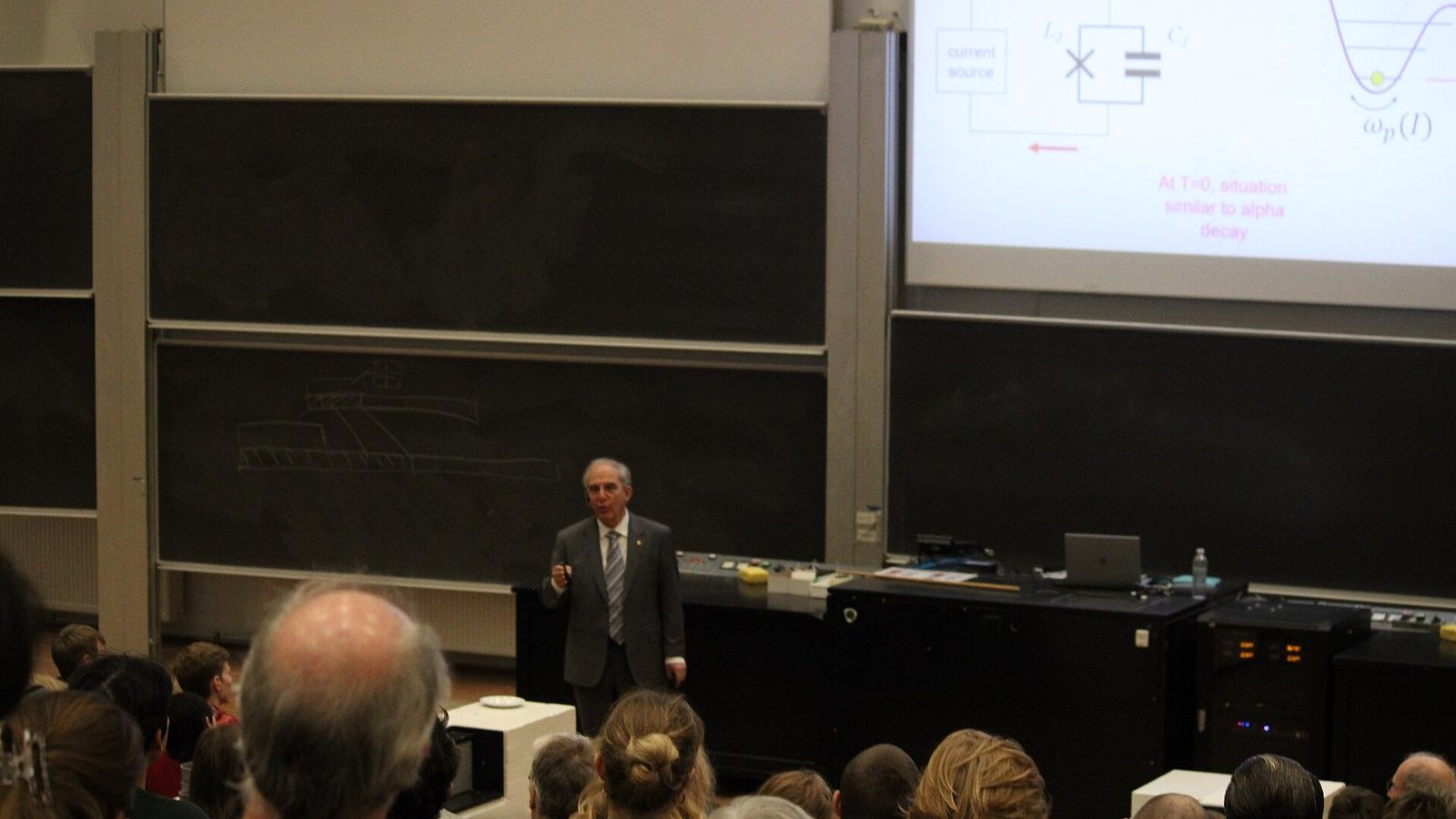
The Nobel Prize for a circuit you can hold in your hand
The Nobel Prize in Physics 2025 went to three physicists who showed in 1985 that an electrical circuit a centimetre across obeys quantum mechanics: it tunnels, and its energy comes in steps. That circuit is the ancestor of today's quantum processors.
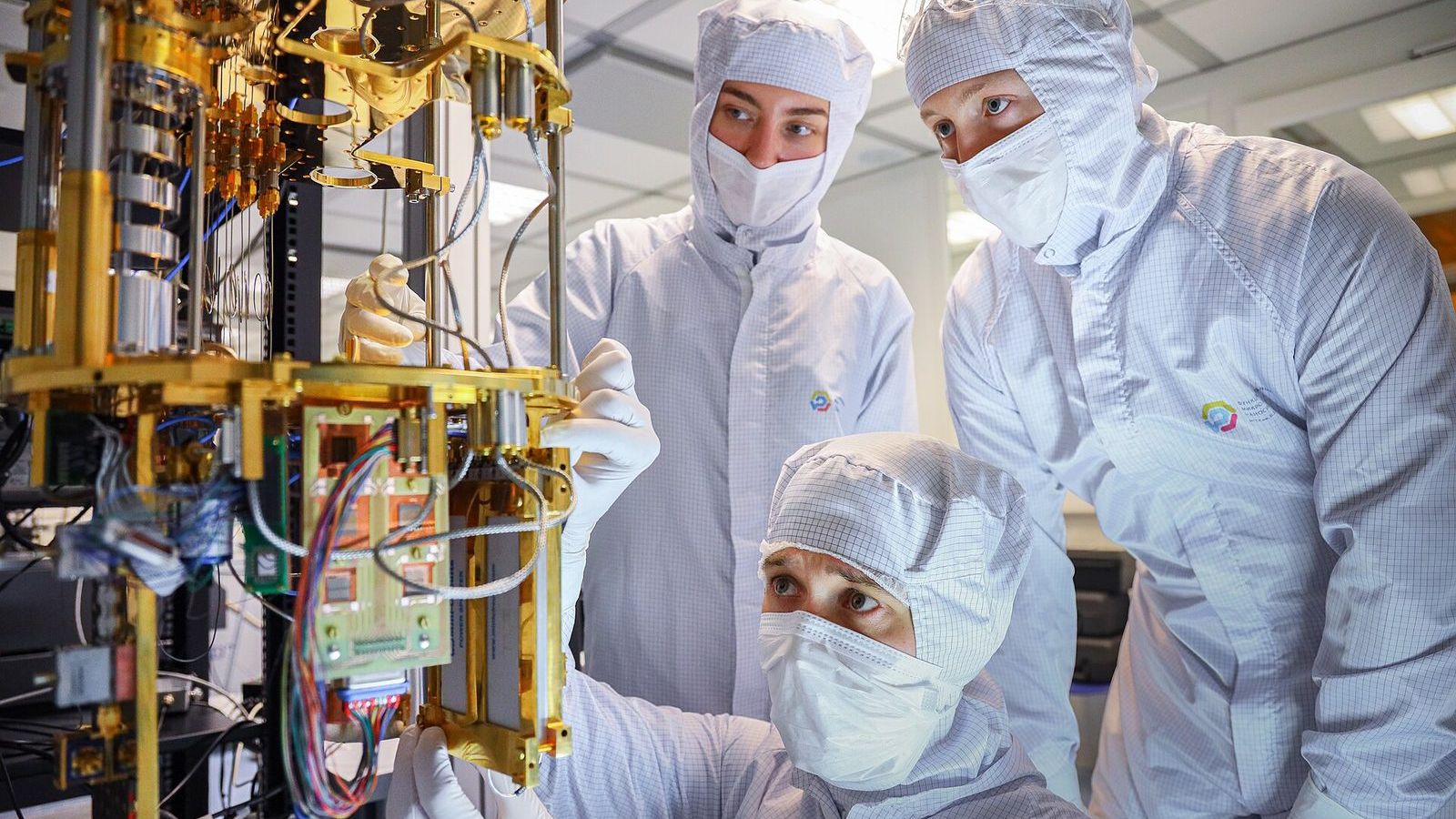
Why quantum computers need error correction
A qubit forgets its state in microseconds and every operation on it goes wrong about once in a thousand times. Useful algorithms need billions of operations. The way across that gap is error correction, and in 2024 it worked for the first time.

What Shor's algorithm does to RSA, and when
Most of the encryption on the internet rests on the difficulty of factoring large numbers. In 1994 Peter Shor showed that a quantum computer could do it quickly. Here is how the algorithm works in outline, how large the machine would need to be, and what is being done about it.
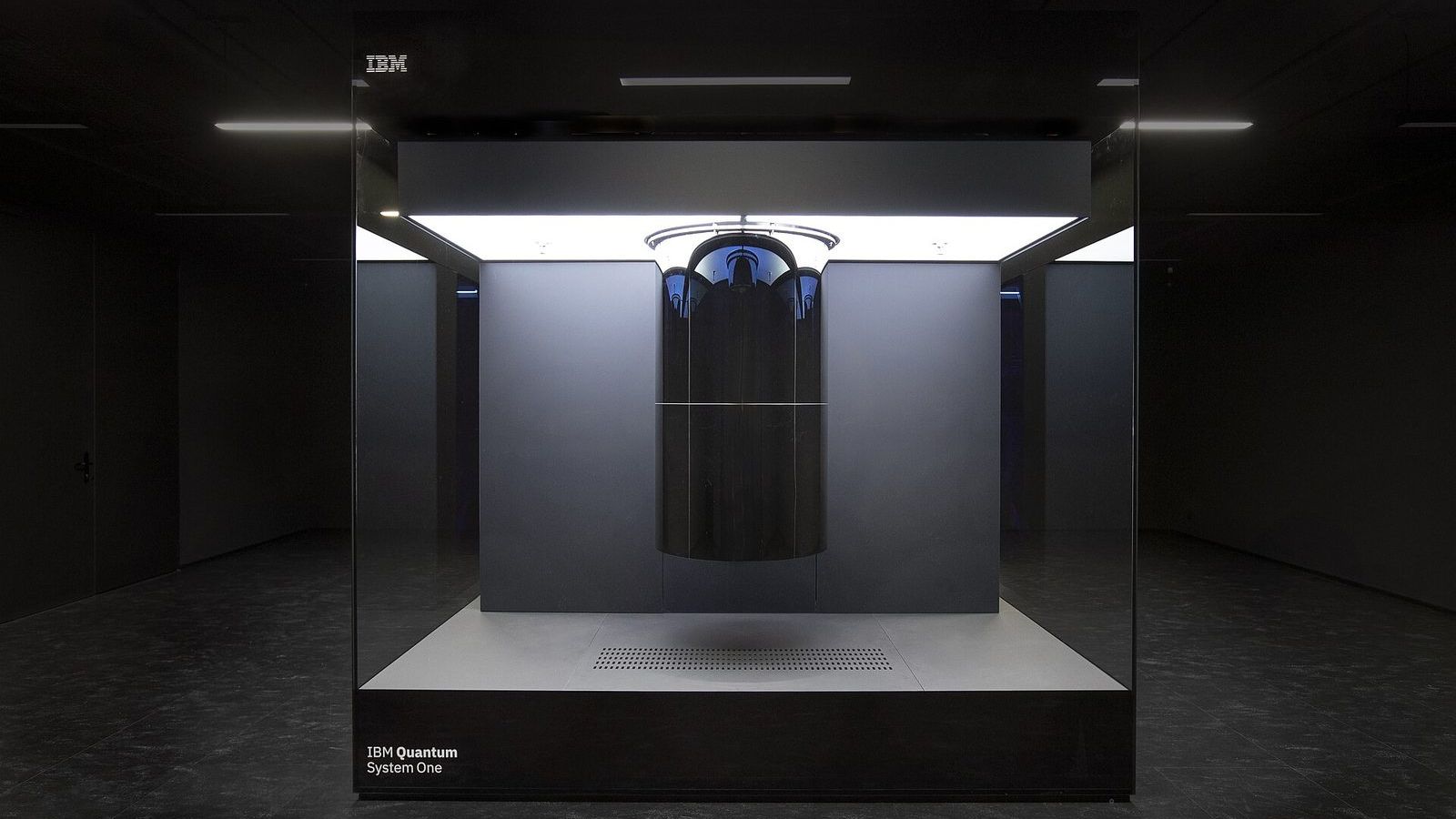
What a qubit is
A bit is 0 or 1. A qubit is described by two complex numbers, and reading it out gives you one bit and destroys the rest. Here is what that means, why 50 of them overwhelm any computer, and what they are made of.
Entanglement cannot send messages
Measure one particle of an entangled pair and the other's state is fixed at once, however far away it is. It sounds like a telegraph. It is not one, and the reason is simple enough to state in a paragraph.
Bell's theorem in one page
In 1964 John Bell showed that no theory in which particles carry their properties with them can reproduce what quantum mechanics predicts for pairs of entangled particles. The argument fits on a page, and the experiments have been done.
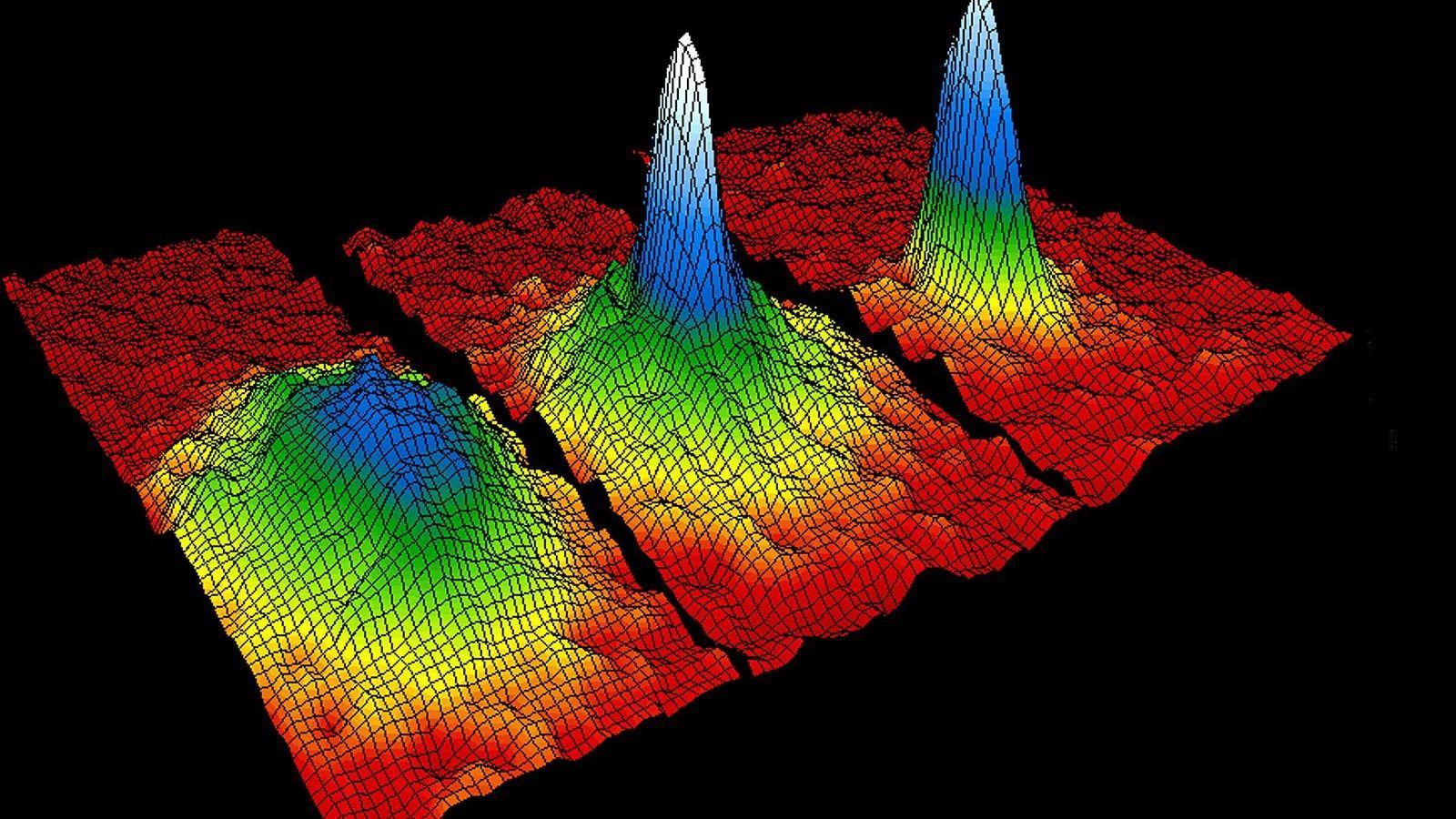
The coldest things in the universe are in laboratories
Empty space is 2.7 kelvin. On 5 June 1995 a cloud of two thousand rubidium atoms in Colorado reached 170 billionths of a kelvin and turned into a single quantum object. Here is how it was done and what a Bose-Einstein condensate is.
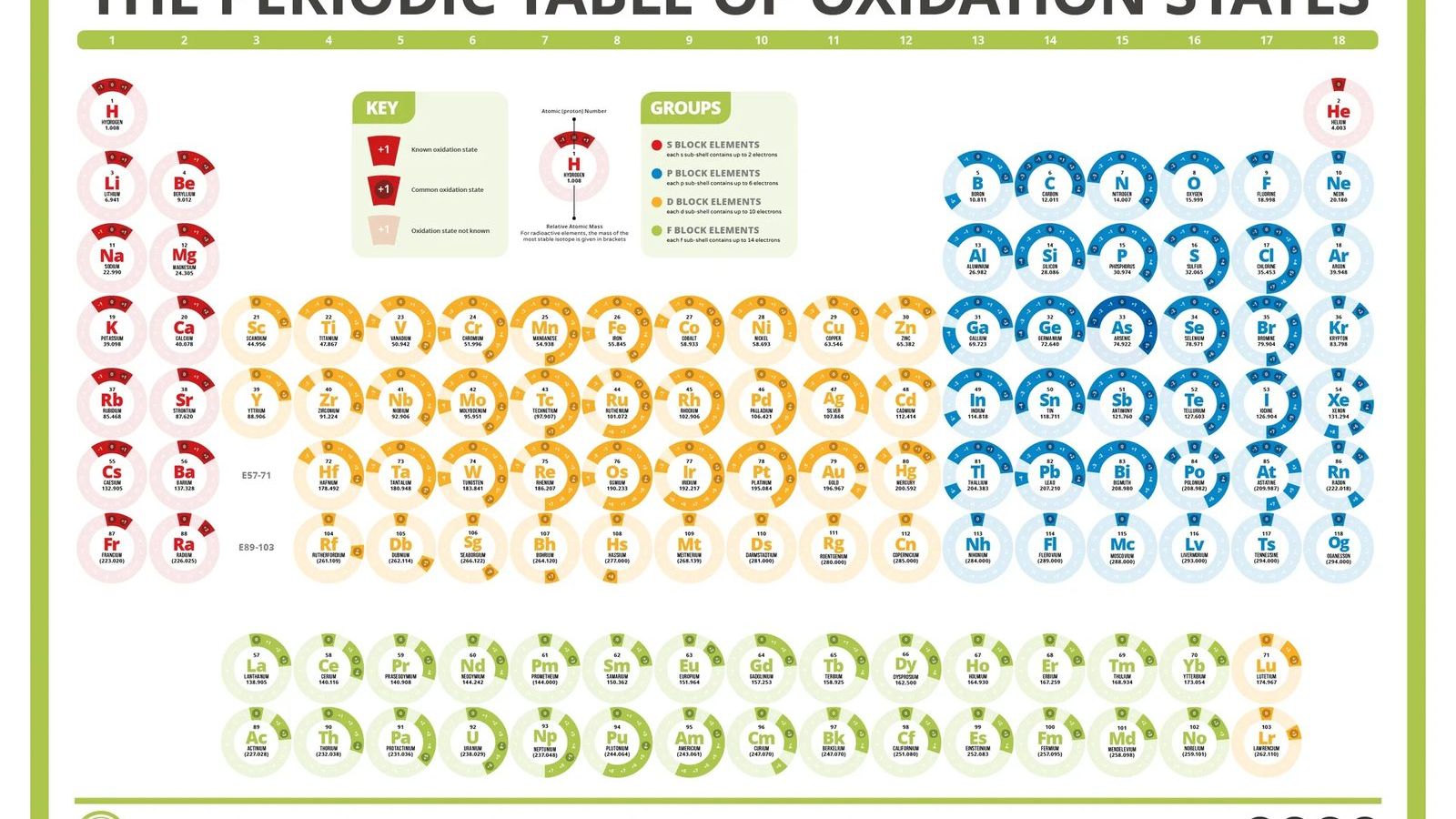
Why the periodic table has the shape it has
The rows of the periodic table hold 2, 8, 8, 18, 18, 32, and 32 elements. Those numbers follow from one rule about electrons, the exclusion principle, and a count of the states the hydrogen atom allows.