
The wave function, uncertainty, and tunnelling
What the wave function describes, what Schrödinger's cat was for, why uncertainty is not about clumsy measurements, and how a particle passes through a wall.
Articles
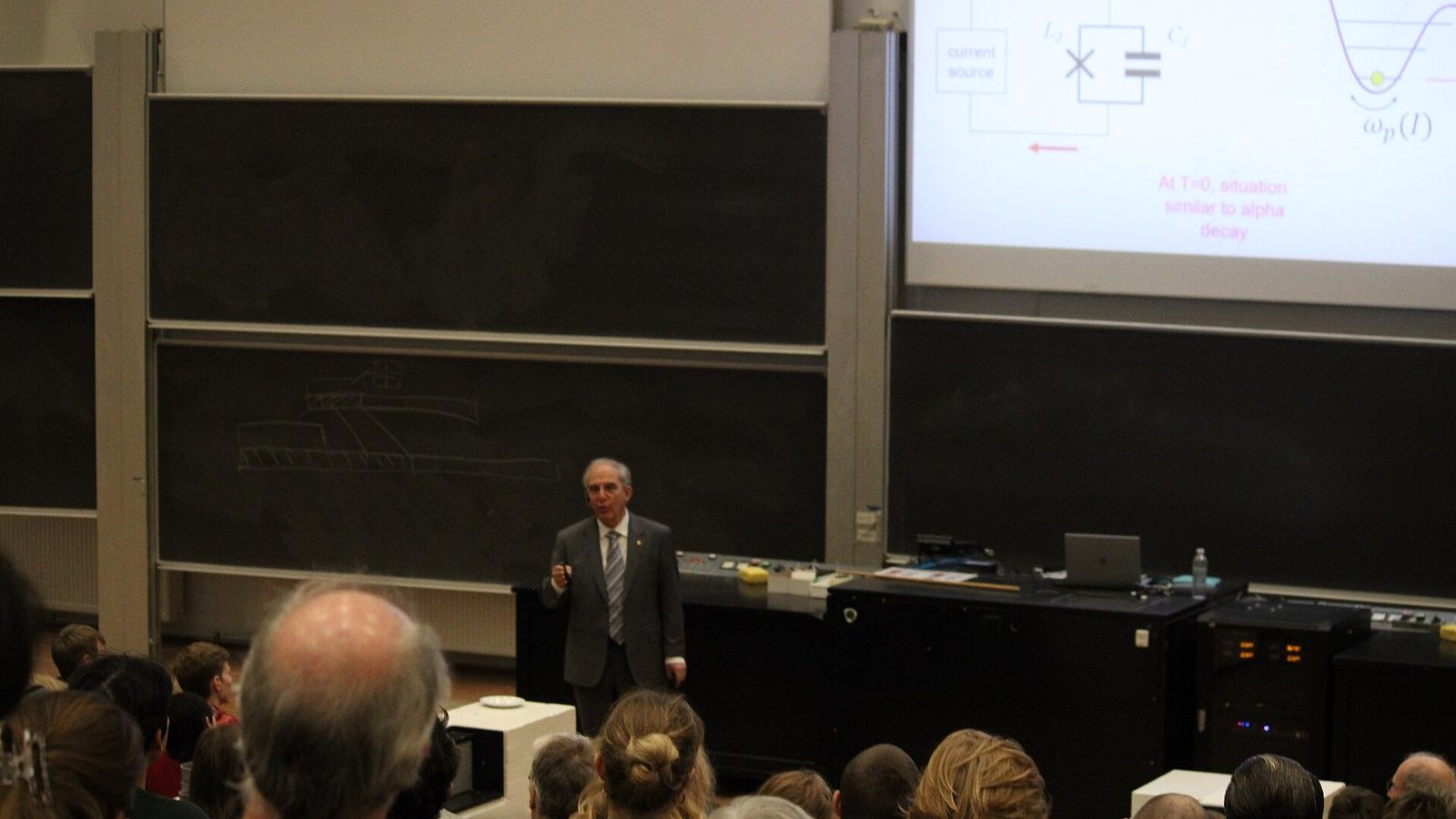
The Nobel Prize for a circuit you can hold in your hand
The Nobel Prize in Physics 2025 went to three physicists who showed in 1985 that an electrical circuit a centimetre across obeys quantum mechanics: it tunnels, and its energy comes in steps. That circuit is the ancestor of today's quantum processors.
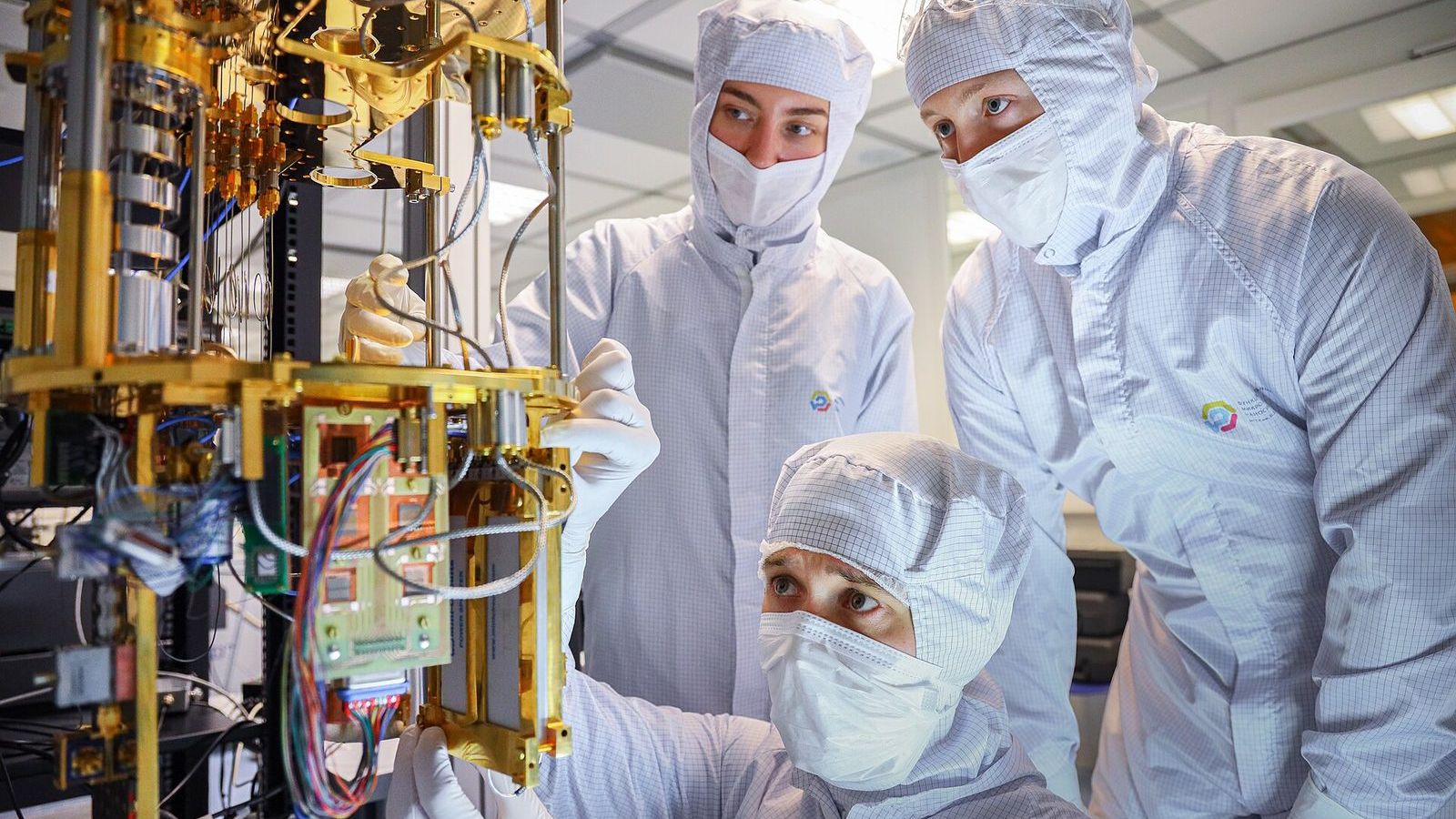
Why quantum computers need error correction
A qubit forgets its state in microseconds and every operation on it goes wrong about once in a thousand times. Useful algorithms need billions of operations. The way across that gap is error correction, and in 2024 it worked for the first time.

What the colours of quantum dots have to do with a particle in a box
Quantum dots are crystals so small that their colour depends on their size. The explanation is the first problem solved in every quantum mechanics course, a particle trapped in a box, and it earned a Nobel Prize in 2023.
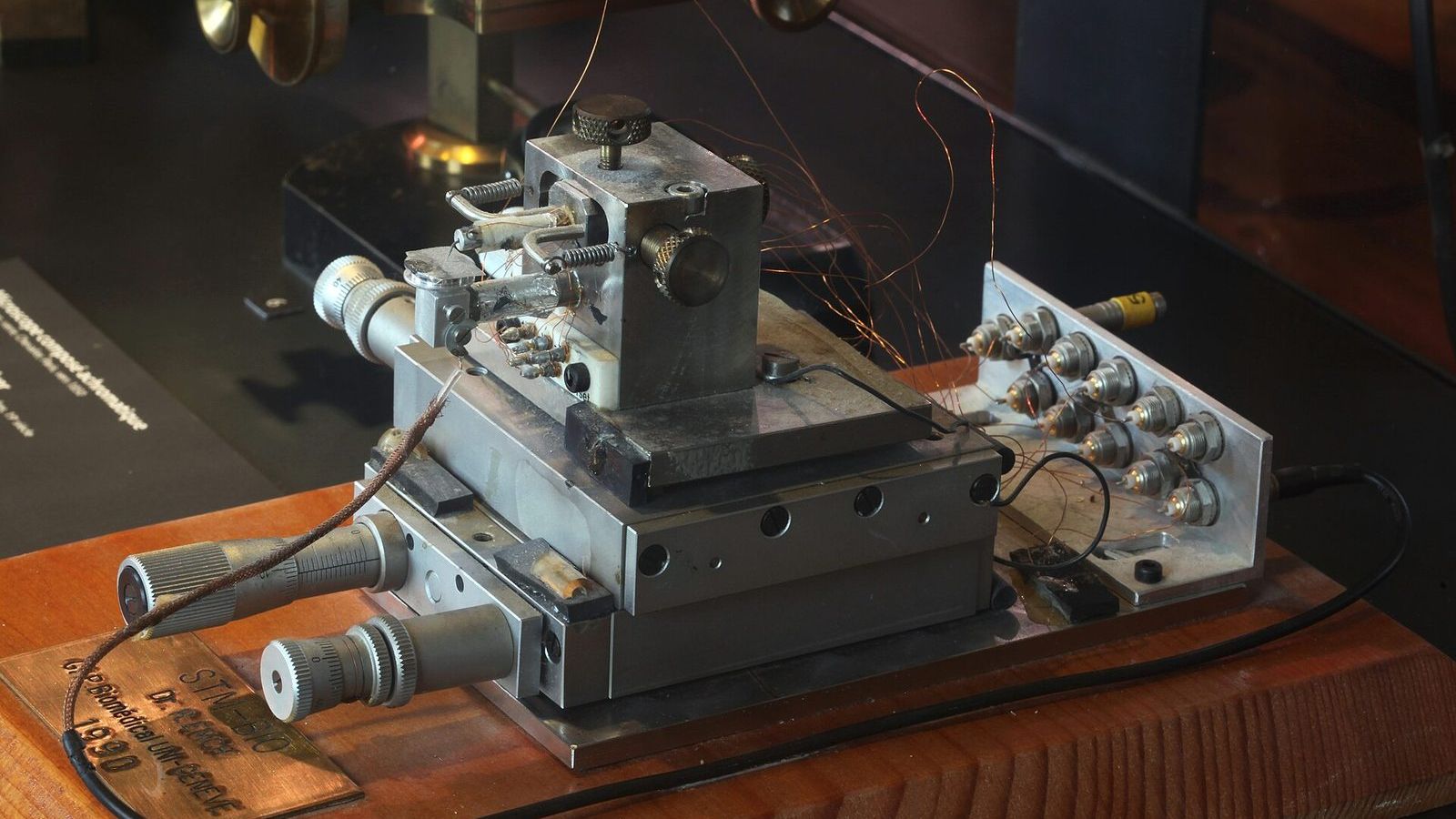
How a scanning tunnelling microscope sees atoms
A metal needle hovers less than a nanometre above a surface, and electrons cross the gap without ever being in it. The current changes tenfold for every tenth of a nanometre, and that is why the instrument sees single atoms.
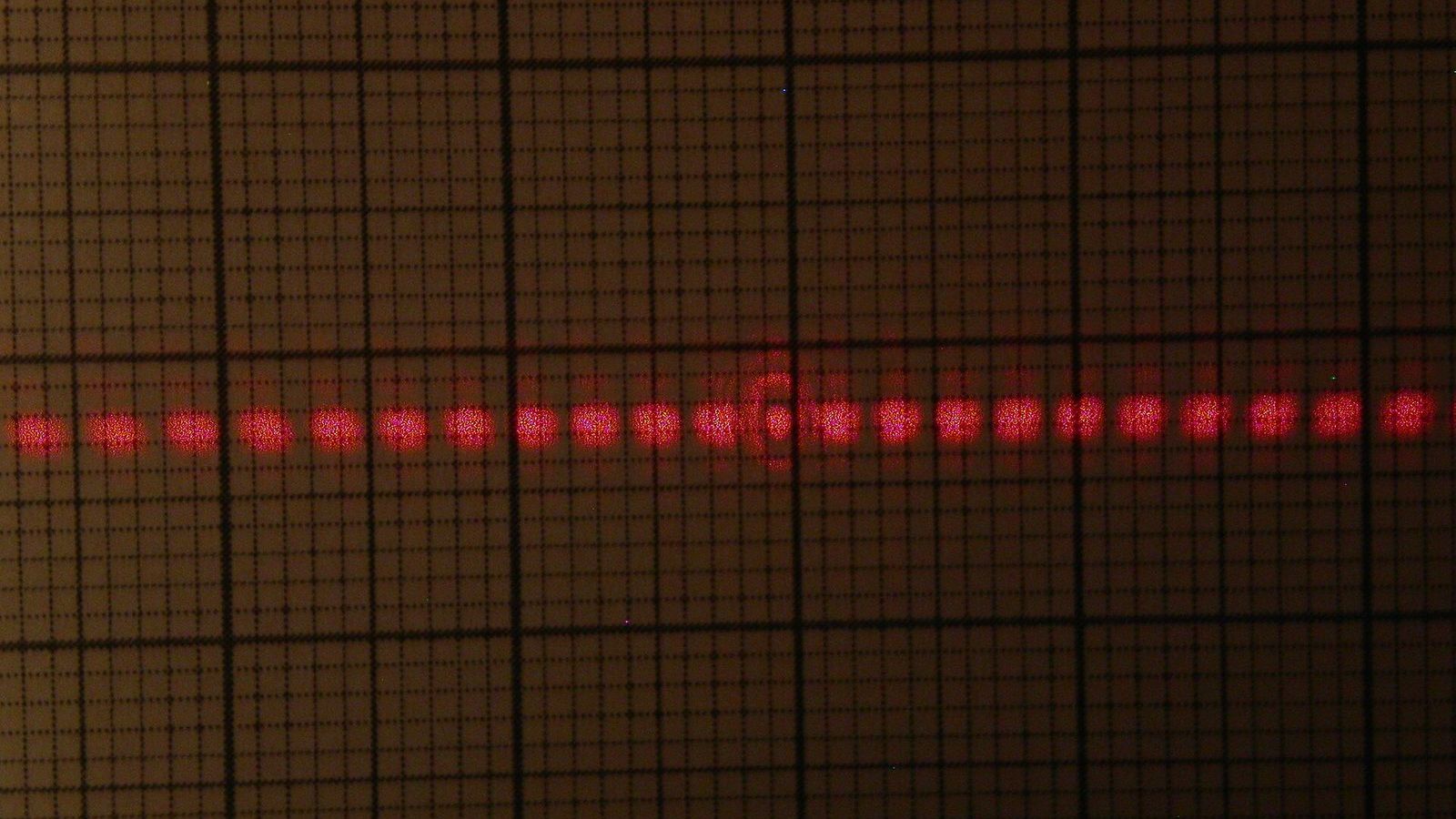
The uncertainty principle is not about clumsy measurements
The usual story says that measuring a particle's position disturbs its momentum. The relation Heisenberg found is stronger and stranger: a particle does not have a sharp position and a sharp momentum at the same time, whether or not anyone measures it.
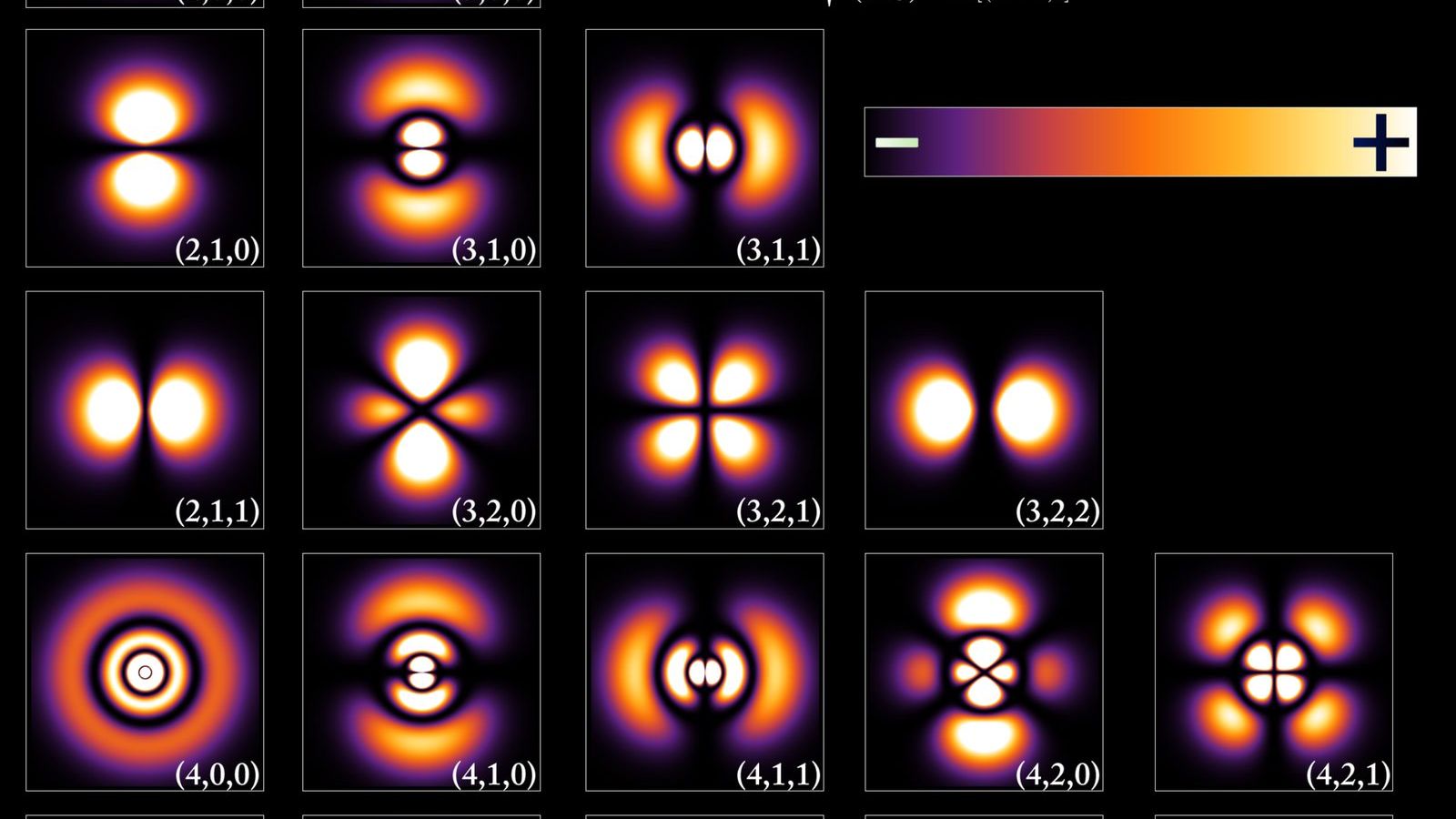
Why atoms do not collapse
A classical electron circling a proton would radiate away its energy and hit the nucleus in about a hundredth of a nanosecond. Atoms last forever. The reason is the uncertainty relation, and it gives the size of the atom in one line.

Schrödinger's cat, without the mysticism
Schrödinger invented the cat in 1935 to show that something was wrong, not to claim that cats can be alive and dead at once. What the argument was for, what decoherence explains, and what is still open.
In the masterclass
The Wave Function and the Schrödinger Equation
What the wave function describes, Born's rule, and the equation that moves it forward in time
Wells, Barriers, and Tunnelling
The particle in a box, quantized energies, and the tunnelling that classical physics forbids
Operators, Measurement, and Uncertainty
Observables as operators, measurement outcomes as eigenvalues, and the uncertainty relation derived